How to Calculate the Real Profit of Your Dukan (Not Just Sales)
Many shops look busy and still lose money. Here's a simple way to see what you really earn each day and month.
"Aaj Rs 50,000 ki sale hui" sounds good. But if those goods cost you Rs 44,000 and rent, salary and electricity cost Rs 8,000 a day on average, you lost money today. Sales are not profit.
The three numbers you need
- Sales: what customers paid you (after discounts).
- Cost of goods sold: what the items you sold cost you to buy.
- Running costs: rent, salaries, electricity, transport, packaging, tea.
Real profit = Sales − Cost of goods sold − Running costs
A simple example
| Amount | |
|---|---|
| Sales this month | Rs 900,000 |
| Buying price of what was sold | Rs 765,000 |
| Profit on goods | Rs 135,000 |
| Rent, salaries, bills, transport | Rs 95,000 |
| Real profit | Rs 40,000 |
The shop "made" Rs 900,000, but the owner earned Rs 40,000.
The mistake almost every shop makes
Many shopkeepers subtract the money they paid the wholesaler this month from this month's sales. But you don't sell everything you buy in the same month. If you bought a big stock of oil before a price rise, your "profit" looks terrible this month and amazing next month. Neither is true.
The fix: count the cost of goods when they are sold, using each product's buying price. Your stock purchases then don't get subtracted twice.
Your shop online, free.
Products, online orders and delivery, set up in minutes.
Margin: which products really earn
Margin is the profit on one item as a share of its price.
- Sugar bought at Rs 150 and sold at Rs 160: Rs 10 profit, about 6%.
- A biscuit pack bought at Rs 40 and sold at Rs 50: Rs 10 profit, 20%.
Both give Rs 10, but you need far fewer biscuit sales to earn the same. Knowing your margins tells you what to display at the front, what to put on offer, and what not to discount.
Three habits that protect profit
- Update buying prices when they change. Prices rise often; a stale buying price hides losses.
- Watch discounts. A 10% discount on a 6% margin item is a loss on every sale.
- Count stock regularly. Damaged, expired or missing items are costs too.
Let the software do the maths
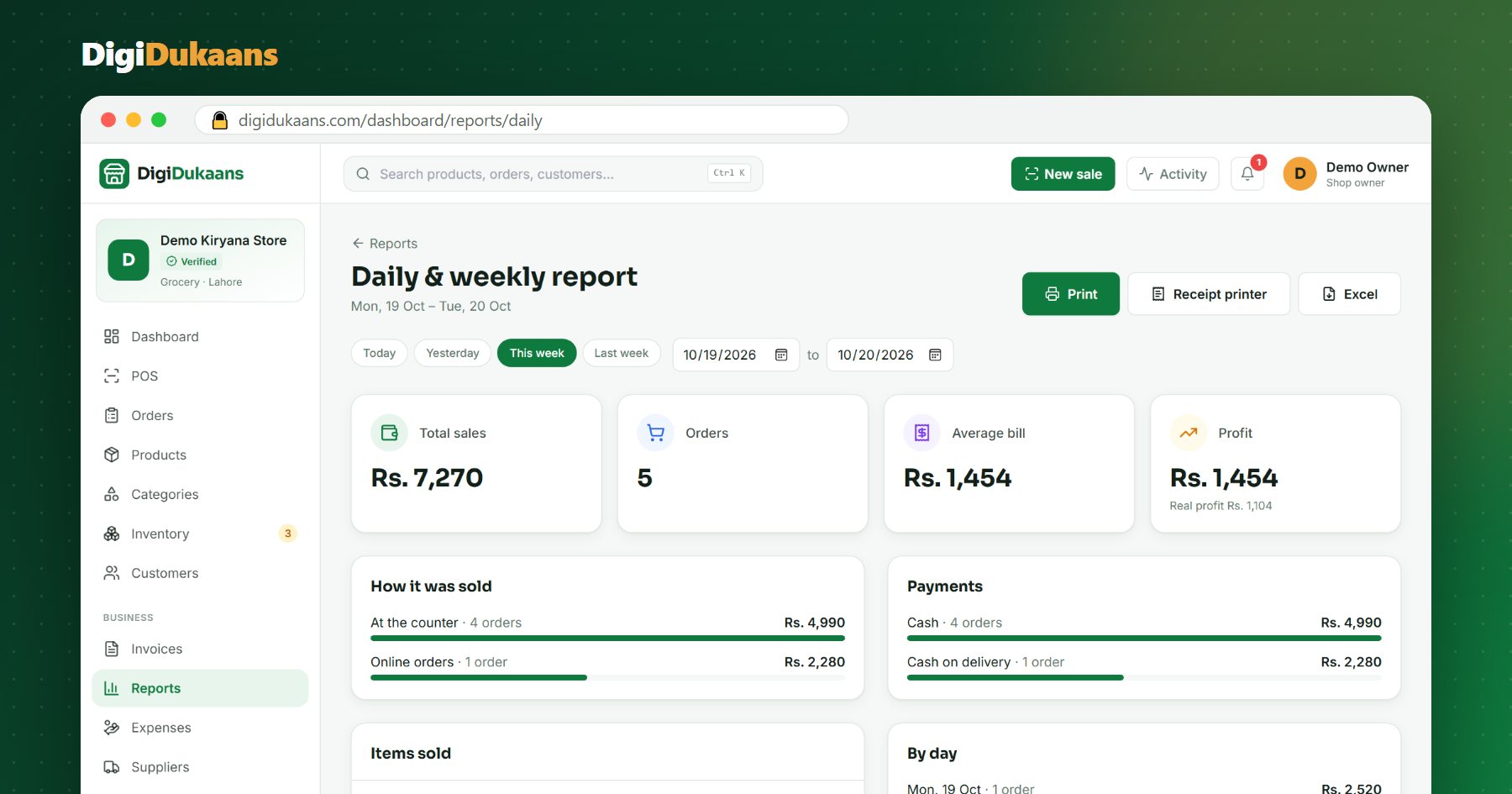
On DigiDukaans you add a buying price to each product (only you can see it). Every sale then remembers what it cost you, so your reports show profit on goods, your most profitable products, and on the Business plan the real profit after running costs, in your daily and weekly report. Try it in the demo with sample numbers.
Frequently asked questions
Is profit the same as sales? +
No. Sales is what customers paid. Profit is what's left after paying for the goods and your running costs.
Should I subtract my wholesaler payments from sales? +
Not directly. Use the buying price of the items you sold instead; otherwise stock you haven't sold yet makes the month look worse than it is.
What is a good margin for a kiryana store? +
It varies by item: staples like flour and sugar have thin margins, while snacks, cosmetics and household items usually earn more. Look at your own numbers product by product.
DigiDukaans Team · Helping local shops sell online
We build DigiDukaans, the online shop, POS and accounts app for local shops, restaurants, tailors and home businesses in Pakistan.
Keep reading
All posts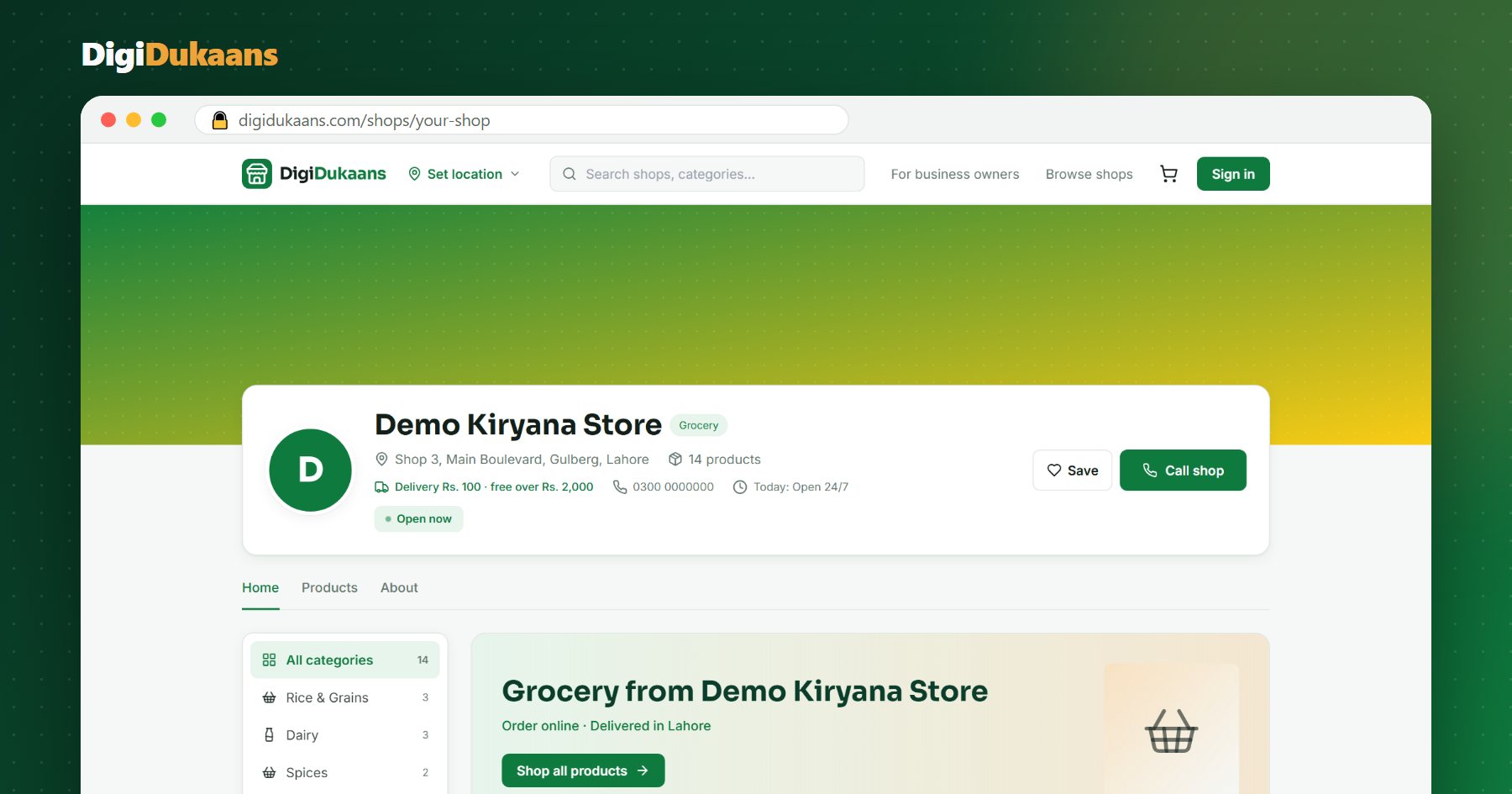
How to Sell Online in Pakistan Without a Website (2026 Guide)
You don't need a developer or a website to take orders online. Here's how a kiryana, cloth or medical store can start selling online this week, for free.
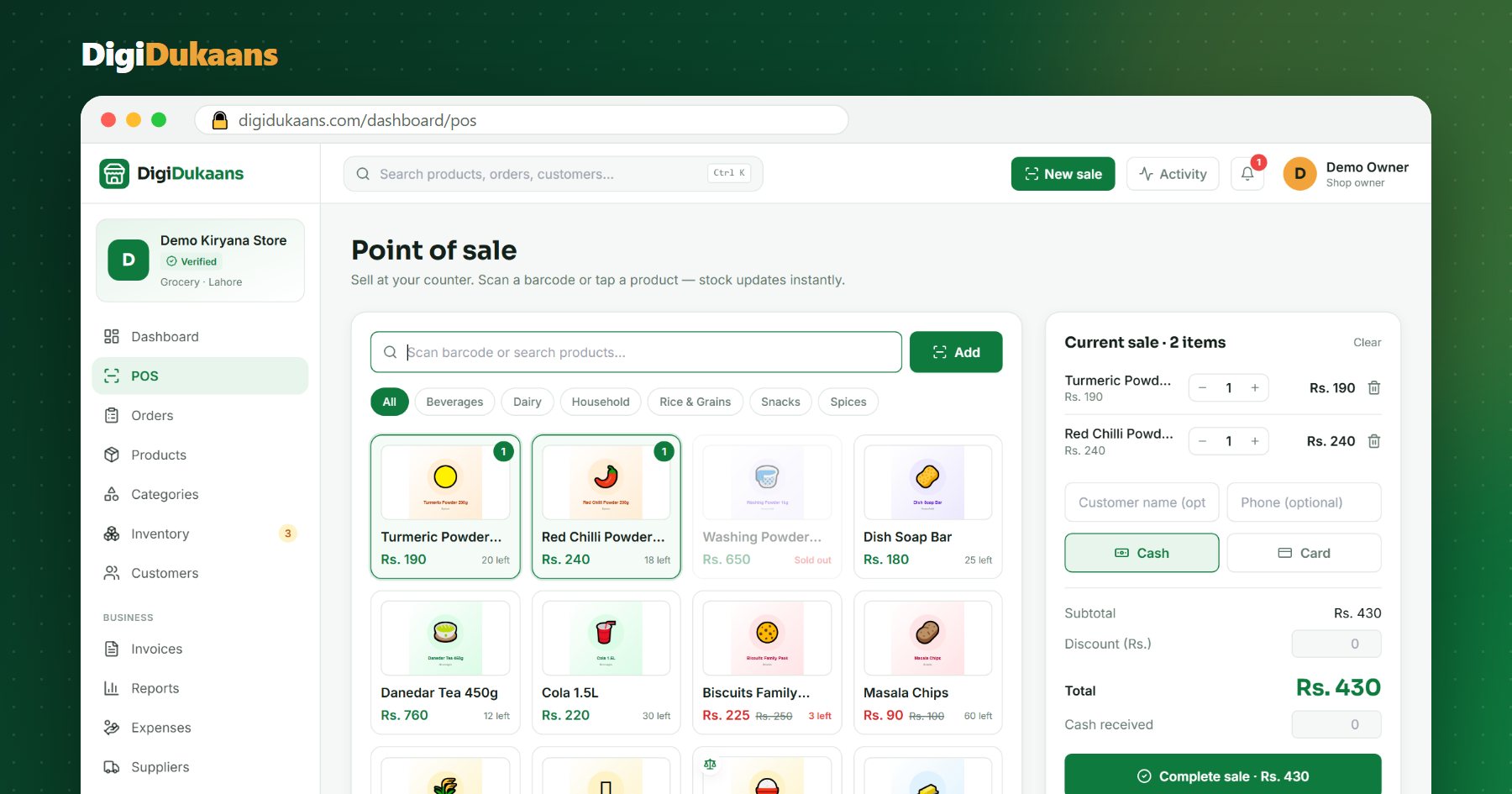
POS Software for Kiryana Stores in Pakistan: What to Look For
A good POS saves time at the counter and stops stock and cash from quietly going missing. Here's what a kiryana store should check before choosing one.
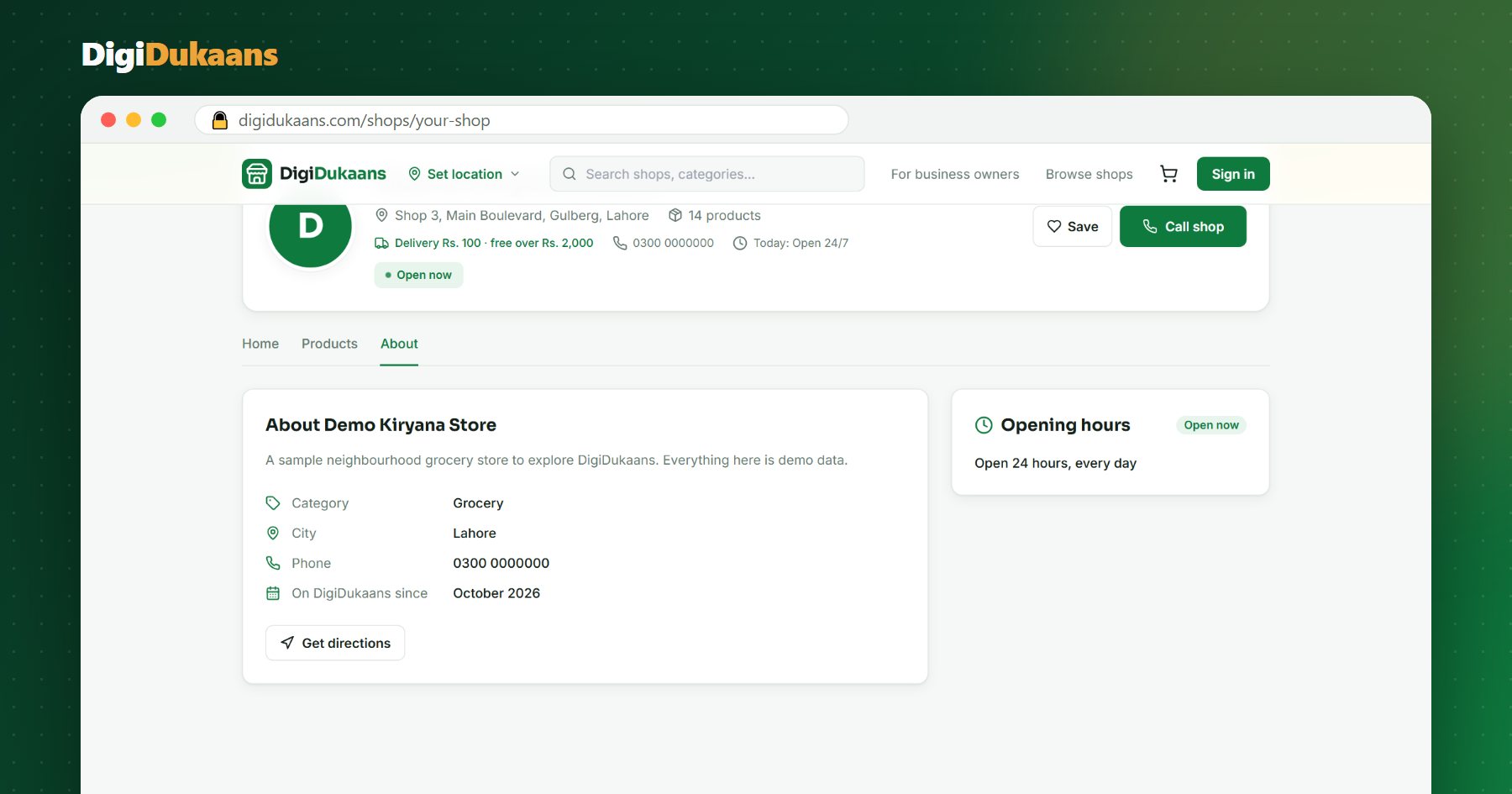
How to Put Your Shop on Google Maps in Pakistan (Step by Step)
When people search "kiryana store near me", Google Maps decides who they see. Here's how to get your dukaan on the map, for free.